7 Tips for Choosing the Best Well Filtration System
Choosing the right well filtration system begins with the water itself, not a glossy product label. Private wells can carry iron, manganese, sediment, sulfur odors, hardness, or harmful microorganisms. Each problem needs a different treatment method. A clear glass may still hide an invisible risk.
Peter Gleick, co-founder of the Pacific Institute and a respected water researcher, has stated, “Water is a human right.” That principle makes testing essential. Before comparing filters, collect a certified laboratory sample after heavy rain and during normal household use. Record stains on sinks, metallic tastes, rotten-egg odors, and changes in water pressure. Small clues matter. They are not proof.
This guide, “7 Tips for Choosing the Best Well Filtration System,” explains how to connect test results with practical equipment choices. It considers flow rate, contaminant removal, maintenance, installation space, certification, and long-term cost. A system that removes iron may not control bacteria. A carbon filter may improve taste but fail against certain dissolved minerals. Assuming one device solves everything is an easy mistake.
Look beyond the purchase price. A filter housing beside a furnace needs room for cartridge changes. A backwashing unit may require drainage, electricity, and regular settings checks. Ask who will service it when the water turns cloudy on a Sunday morning. Certified treatment professionals can interpret laboratory results and verify performance. Still, recommendations deserve questions. The “best” system is not universal. It is the system that safely matches your water, household demand, budget, and willingness to maintain it.
Assess Your Well Water Quality and Filtration Needs
7 Tips for Choosing the Best Well Filtration System
Assess Your Well Water Quality and Filtration Needs
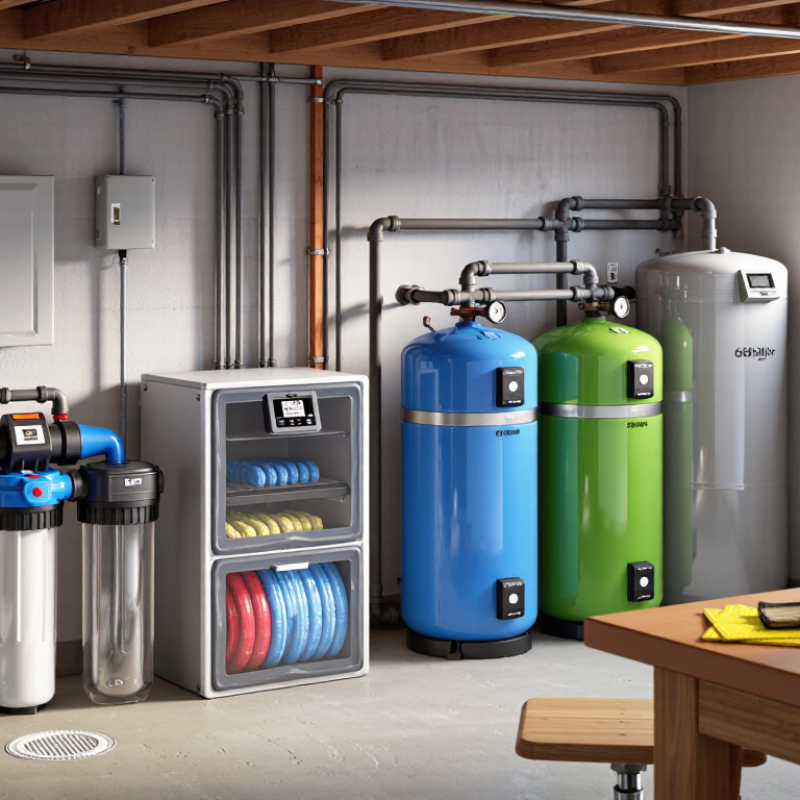
Choosing a well filtration system should begin with evidence, not guesswork. Clear water can still contain dissolved minerals, bacteria, or unwanted metals. I once saw water that looked clean but left orange stains around every sink. A certified laboratory test revealed elevated iron levels. Appearance was misleading.
Test your water before comparing equipment. Request results for bacteria, pH, hardness, iron, manganese, nitrate, and sediment. Your location may require additional testing, especially after flooding or nearby construction. Keep a recent report available. Old results may no longer describe your well.
Match each contaminant to a suitable treatment method. Sediment filters can trap grit, while carbon filters may improve taste and odor. Hard water often needs a softening process, not a simple cartridge. Disinfection may be necessary when bacteria are detected. Ask a qualified water professional to interpret unusual results and calculate flow requirements.
Measure your household’s daily use. A system that works for one bathroom may struggle with several showers and laundry cycles. Check pressure loss, replacement intervals, wastewater, and installation space. These details are easy to overlook. I have made that mistake myself.
Retest after installation. Keep maintenance records, even when everything seems fine. Filters do not last forever. A neglected housing can become a hidden problem.
Compare Filtration Technologies for Specific Contaminants
7 Tips for Choosing the Best Well Filtration System
Compare filtration technologies with your laboratory report, not with marketing claims. Sediment filters catch sand, rust flakes, and cloudy particles. They cannot reliably remove dissolved chemicals. Activated carbon can reduce chlorine, odors, some pesticides, and selected volatile compounds. Its performance depends on contact time and cartridge replacement. It is not a dependable barrier for nitrate or most minerals.
Hard water needs a water softener, while iron and manganese may require oxidation followed by filtration. Ultraviolet treatment can inactivate many bacteria and viruses, but it does not remove sediment or chemicals.
Reverse osmosis can reduce nitrate, arsenic, fluoride, and many dissolved solids at a drinking-water tap. However, it needs pressure, maintenance, and reject-water management. It is often unnecessary for every household outlet.
Test for bacteria, nitrate, pH, hardness, iron, manganese, and local industrial contaminants. Add targeted tests when nearby agriculture, fuel storage, or old plumbing creates a reasonable concern. Match treatment to measured levels. Oversizing wastes money, while undersizing causes early filter failure.
Keep a written maintenance schedule, including replacement dates and UV-lamp checks. Ask a certified water professional to verify flow rate, installation, and post-treatment results.
A system may look excellent on paper. Real well conditions can still expose weaknesses, especially after heavy rain. Even experienced installers sometimes need to revise the design after follow-up testing.
Check System Capacity, Flow Rate, and Installation Requirements
A well filtration system should match your household demand, not just the well’s test report. Check its rated capacity in gallons per minute and daily volume. A family of four may run a shower, washing machine, and kitchen tap together. The pressure gauge can drop quickly. Measure peak use during a normal morning. Record the lowest reading, too. It may reveal a weak pump or narrow pipe.
Flow rate matters at the inlet and through the filter media. A system rated at 12 GPM may deliver less when cartridges collect sediment. Ask for the pressure range, service flow rate, and maximum operating pressure. Compare those figures with your pump curve and storage tank size. Leave a safety margin. I once saw a correctly sized filter perform poorly because its bypass valve was partly closed. Small details matter.
Installation requirements deserve equal attention. Measure wall space, floor clearance, and the drain route before ordering equipment. Leave room above the housing for cartridge changes. Keep shutoff valves accessible. Confirm pipe diameter, electrical needs, and connection type with a qualified installer. Local plumbing rules may affect drain discharge and backflow protection. Install pressure gauges before and after the filter. The difference shows when cleaning or replacement is due. Keep test results and service dates in a simple log. Water quality can change after flooding, drought, or pump repairs. Retest when conditions shift. Specifications help, but they are not infallible. Measure twice. Recheck actual flow after installation, because a quiet system can still restrict water at the tap.
Evaluate Maintenance Tasks, Replacement Costs, and Lifespan
A well filtration system is only as reliable as its maintenance plan. The U.S. Environmental Protection Agency recommends testing private-well water at least annually, especially for bacteria and nitrate. That schedule should guide filter selection, not a glossy product promise. Record pressure readings, flow changes, cartridge dates, and laboratory results in one simple log. Small details matter.
Replacement costs can exceed the initial purchase price. Sediment cartridges may need frequent changing after heavy rain, while carbon media can lose performance before the water looks cloudy. The World Health Organization sets a 10 micrograms-per-liter guideline for arsenic and 50 milligrams-per-liter guideline for nitrate. A clear glass does not prove safe water. Choose certified treatment performance, such as NSF/ANSI 53 or 58, only when the standard matches the contaminant. Ask for verified capacity, not vague “long life” language. Many well pumps last roughly 8 to 15 years, but filtration components usually require earlier service. That difference is easy to overlook. A neglected filter can restrict flow, strain equipment, and increase emergency expenses. The imperfect part is prediction: iron, sediment, seasonal flooding, and household demand can shorten every estimate. Review the system after one year, then adjust replacement intervals using actual test results and service records.
7 Tips for Choosing the Best Well Filtration System
Compare typical annual maintenance tasks, replacement costs, and expected service life before selecting a residential well filtration system.
The chart uses practical midpoints from common residential planning ranges. Cartridge systems commonly require about 1–3 filter changes per year, UV systems usually require one lamp replacement annually, reverse-osmosis systems generally need 1–2 prefilter changes per year, and water softeners often require regular monthly salt replenishment. Actual costs and service life depend on water quality, usage, installation conditions, and local labor rates.
Verify Certifications, Warranty Coverage, and Professional Support
When choosing a well filtration system, verify its certifications before comparing prices. Look for recognized testing standards that match your water problem, such as sediment, iron, bacteria, or chemical contaminants. A certification should identify the exact model and tested claims. Do not accept a generic logo on a sales page. Check the certifying organization’s public directory, if available. Keep a copy of the certificate and performance report.
Warranty coverage can reveal how confidently a manufacturer supports its equipment. Read the exclusions carefully. Some warranties cover tanks but exclude valves, media, labor, or damage from untreated water. Ask how long replacement parts remain available. Confirm whether hard water, freezing temperatures, incorrect pressure, or missed maintenance can cancel coverage. Details matter. A written answer is safer than a promise made beside a showroom display.
Professional support is equally important for private wells. Ask whether trained technicians can test your water, size the system, and adjust settings after installation. Request a clear service schedule, including filter changes, media replacement, and sanitation checks. A pressure gauge, shutoff valve, and accessible drain can make future service less disruptive. I once focused too heavily on removal performance and overlooked maintenance access. That mistake made routine servicing slower and more expensive. Before buying, ask who responds when water quality changes, parts fail, or the system needs inspection after a power outage. Get names, response times, and service charges in writing.
7 Tips for Choosing the Best Well Filtration System - Verify Certifications, Warranty Coverage, and Professional Support
| Tip | What to Evaluate | Reliable Evidence or Benchmark | Practical Selection Criteria | Warning Signs |
|---|---|---|---|---|
| 1. Test the Well Water First | Identify contaminants and water conditions before selecting equipment. | Use a qualified laboratory and review results for bacteria, nitrate, pH, hardness, iron, manganese, turbidity, and any locally relevant contaminants. | Choose treatment based on measured concentrations, household demand, flow rate, and the intended point of use. | A recommendation made without a current water analysis or without discussing seasonal changes in well water. |
| 2. Match the Technology to the Contaminant | Confirm that the treatment method is designed for the specific problem. | Common examples include sediment filtration for particles, activated carbon for many taste and odor issues, water softening for hardness, reverse osmosis for selected dissolved contaminants, and ultraviolet treatment for microbial inactivation. | Request documented reduction claims for the exact contaminant and concentration range shown in the test report. | One device is presented as a universal solution, or performance claims are not linked to a specific standard or test condition. |
| 3. Verify Certifications and Standards | Check whether the complete system, not only an individual component, has an applicable certification. | Relevant standards may include NSF/ANSI 42 for aesthetic effects, NSF/ANSI 53 for health effects, NSF/ANSI 58 for reverse osmosis systems, NSF/ANSI 44 for residential water softeners, and NSF/ANSI 55 for ultraviolet microbiological water treatment systems. | Verify the exact model, certified claim, test conditions, replacement parts, and current listing in the certifier's online directory. | Only a logo is displayed, the model number is missing, or the certification covers a different configuration. |
| 4. Compare Capacity and Flow Performance | Ensure the system can supply sufficient treated water during peak household use. | Review service flow rate, pressure requirements, daily production, contaminant capacity, tank size, and pressure loss across the equipment. | Select a rated capacity that meets peak demand while accounting for well yield, pump performance, and the number of fixtures used at the same time. | The specification lists only maximum flow, omits pressure conditions, or ignores the well pump's available capacity. |
| 5. Read the Warranty in Detail | Understand what is covered, for how long, and under which installation and maintenance conditions. | A complete warranty should identify coverage for tanks, housings, valves, pumps, electronics, labor, shipping, and replacement parts, with clear exclusions. | Compare coverage periods, prorated terms, registration requirements, transferability, and the process for filing a claim. | The warranty is unavailable before purchase, excludes major components without clear notice, or requires undocumented maintenance conditions. |
| 6. Assess Professional Installation and Support | Determine whether qualified assistance is available for sizing, installation, commissioning, and troubleshooting. | Look for written installation procedures, service intervals, parts availability, technical documentation, and access to trained service personnel. | Prefer a provider that can explain plumbing changes, drainage needs, electrical requirements, disinfection procedures, and post-installation testing. | No local service pathway, unclear responsibility for installation problems, or support limited to generic online instructions. |
| 7. Calculate Total Ownership Cost | Compare the full cost of operating and maintaining the system over time. | Include purchase price, installation, filter or media replacement, salt or chemical use, electricity, wastewater, testing, repairs, and disposal of used cartridges. | Ask for a written maintenance schedule and estimated annual operating cost based on the household's actual water use and test results. | A low initial price hides proprietary consumables, frequent replacements, high reject-water volume, or unavailable service parts. |
Related Posts
-
2026 How to Choose the Best Well Filter System?
-
How to Choose Water Filtration for Well Water in 2026?
-
Best Well Water Filter Systems for Clean and Safe Drinking Water
-
7 Tips for Choosing the Best Well Water Filter?
-
Top 10 Well Filtration Systems for Clean Water Solutions?
-
Best Tips for Choosing a Well Water Filter?
