7 Tips for Choosing the Best Well Water Filter?
A private well can look clean while carrying iron, sulfur, bacteria, nitrates, or harmful chemicals. Clear water is not proof of safe water. The right well filter begins with evidence, not guesswork.
Rick Andrew, a water treatment expert associated with NSF International, puts it plainly: “There is no one-size-fits-all solution for water treatment.” That principle guides this practical introduction to choosing the best system for your home. A family with orange stains may need iron reduction. Another household may face hard water, cloudy sediment, or bacterial contamination. Each problem requires a different response.
Start with an accredited laboratory test. Test for bacteria, nitrates, pH, hardness, iron, manganese, and other local concerns. Your county health department can help identify regional risks. Keep the results nearby when comparing equipment. A salesperson should explain the technology, flow rate, installation needs, and replacement schedule.
Look for credible certifications, such as NSF or WQA listings, when a product claims contaminant reduction. Certification does not make every filter suitable. It confirms specific performance claims under defined conditions. Read the details.
Also measure your household’s daily water use. A filter that works for one bathroom may fail during a shower, laundry cycle, and kitchen demand. Maintenance matters. A neglected cartridge can reduce pressure and compromise performance.
The honest choice may feel less impressive. That is acceptable. Effective treatment is usually quiet, measured, and consistent. These seven tips will help you compare a well filter with clearer expectations, fewer assumptions, and better long-term reliability.
Identify the Contaminants in Your Well Water
Choosing a well water filter starts with identifying what is actually in your water. Clear water is not necessarily safe. Looks can mislead. A practical sample should go to a state-certified or accredited laboratory, not only a home test kit. Request testing for total coliforms, E. coli, nitrate, arsenic, lead, manganese, iron, and pH. Add local contaminants when nearby farms, mines, septic systems, or industrial sites may affect groundwater.
Pay attention to physical clues, but do not treat them as proof. Orange stains may suggest iron. Black deposits can indicate manganese. A rotten-egg smell may come from hydrogen sulfide, although other causes are possible. Nitrate deserves special attention in homes with infants, because it may enter wells through fertilizer or septic leakage. Smell is evidence, not proof. Retest after flooding, repairs, or noticeable changes in taste.
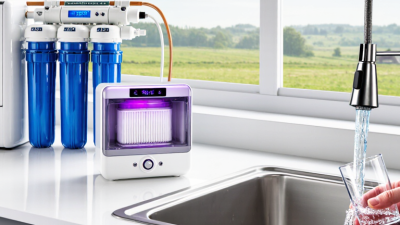
Match the filter to the laboratory report. Sediment filters remove sand and visible particles. Activated carbon can reduce some chemicals, odors, and unpleasant tastes. Ultraviolet treatment can control many microorganisms, but it does not remove metals or nitrate. Reverse osmosis may reduce several dissolved contaminants, but it requires correct installation and maintenance. Check the filter’s independent performance certification for your specific contaminant. A common mistake is choosing the most expensive system without confirming its limits. I once trusted a clear, pleasant-tasting sample too quickly; laboratory results showed elevated iron. Water conditions can change with seasons, so one test may not tell the whole story.
Match Filter Technology to Your Water Quality Needs
Choosing a well water filter starts with water quality, not product appearance. The U.S. Environmental Protection Agency reports that private wells supply drinking water to about 15% of the U.S. population. Unlike municipal systems, these wells are not routinely regulated or treated. Test for bacteria, nitrate, arsenic, iron, manganese, hardness, and pH through an accredited laboratory. Test after flooding, repairs, or changes in taste and smell.
Match each contaminant to the correct technology. Sediment filters capture sand and rust, but they cannot remove dissolved chemicals. Activated carbon can reduce many odors, chlorine traces, and organic compounds. Ion exchange helps with hardness and some nitrates, while reverse osmosis can reduce several dissolved contaminants. Ultraviolet treatment targets microorganisms, but it needs clear water and reliable electricity. The World Health Organization sets a 10 micrograms per liter guideline for arsenic and 50 milligrams per liter for nitrate. These values make testing practical, not optional.
Check flow rate, maintenance frequency, wastewater use, and replacement costs. A filter that removes arsenic may perform poorly against bacteria. A high-capacity system may still fail without pre-filtration. The CDC recommends private well testing at least annually, with additional testing based on local risks. That schedule is useful, though not perfect for every household. Keep laboratory results and service records. Recheck performance after installation, because real plumbing conditions can differ from laboratory claims.
Check Flow Rate, Capacity, and Household Demand
Tip 1: Measure peak flow, not average use. A quiet morning can hide the real demand. USGS reports about 82 gallons of domestic water use per person daily in the United States. However, showers, laundry, and toilets may run together. WaterSense showerheads typically use 2.0 gallons per minute, while older fixtures can use more. Add your largest simultaneous fixtures, then choose a filter with higher rated flow. Pressure loss matters. A filter that starves the upstairs shower is not a successful upgrade.
Tip 2: Match capacity to household demand and water quality. Capacity is not simply the tank’s size. Sediment, iron, hardness, and organic matter can consume a cartridge quickly. The U.S. Environmental Protection Agency estimates that about 23 million American households rely on private wells. Well conditions vary sharply, even between neighboring properties. Test the water through a certified laboratory before selecting media or cartridge size. CDC guidance recommends private wells be tested at least annually. That is easy to overlook.
Tip 3: Check the performance data carefully. Look for tested flow, pressure-drop figures, rated capacity, and replacement intervals. Standards such as NSF/ANSI 42 and 53 can clarify what a system is designed to reduce. Do not trust a large capacity number alone. It may assume unusually clean water. I would leave a safety margin of roughly 20 percent for peak flow, though this is only a practical estimate. Recheck pressure after installation. Real plumbing rarely behaves exactly like a brochure.
7 Tips for Choosing the Best Well Water Filter: Check Flow Rate, Capacity, and Household Demand
The chart shows estimated peak fixture demand for common household-use combinations. Choose a filter with a service flow rate at or above your expected peak demand, while also checking its contaminant-specific capacity and replacement interval.
Planning values use a 2.0 gpm showerhead, a 1.5 gpm bathroom faucet, and a 2.2 gpm kitchen faucet. Actual demand depends on fixture settings, household habits, pressure, and well performance. Filter capacity must be matched to the specific contaminant and tested water quality rather than household size alone.
Compare Installation Requirements and Maintenance Costs
Choosing a well-water filter starts with installation, not advertising claims. The U.S. Environmental Protection Agency reports that private wells serve about 15% of the U.S. population. That makes site-specific testing essential. Send a sample to a certified laboratory before selecting equipment. Test for bacteria, nitrate, iron, manganese, hardness, and regional contaminants.
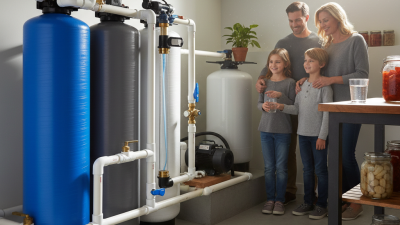
Check the plumbing path. A sediment cartridge may fit near the pressure tank, while ultraviolet treatment needs electricity and clear water. Reverse osmosis systems usually need a drain connection, storage space, and replacement membranes. Ask whether installation requires new valves, wiring, floor drains, or professional drilling. Small details become expensive quickly. Measure twice.
Maintenance costs can exceed the purchase price. Compare cartridge prices, replacement frequency, electricity use, wastewater, and technician visits over five years. The Centers for Disease Control and Prevention recommends testing private well water at least annually, and immediately after flooding or repairs. Use that schedule to plan service visits. Look for performance claims supported by relevant NSF/ANSI standards, such as 42 for aesthetic effects, 53 for health-related contaminants, or 58 for reverse osmosis systems. Standards help, but they do not guarantee every contaminant is removed.
A useful comparison sheet lists installation labor, annual parts, testing fees, and disposal requirements. Keep the old invoices. They reveal the real pattern. I would also leave space for mistakes: test results can change, and a filter selected today may need adjustment next year. Ensure the system has accessible shutoff valves and a bypass line. Future maintenance should not require moving a water heater.
Verify Certifications, Replacement Parts, and Long-Term Value
7 Tips for Choosing the Best Well Water Filter
Tip 1: Test your well water before choosing a filter. A clear glass can hide iron, bacteria, hardness, or sediment. Use a certified laboratory, not only a home strip. Tip 2: Verify certifications carefully. Look for relevant NSF/ANSI standards and independent testing records. Certification should match the contaminant and filter claim. A general “tested” label proves very little.
Tip 3: Check replacement parts before buying. Cartridges, seals, housings, and pressure gauges should be easy to source. Tip 4: Ask about service intervals and actual flow rates. A filter may work well but reduce water pressure during showers. Keep a simple maintenance log. It prevents forgotten changes. Tip 5: Calculate long-term value, including cartridges, electricity, repairs, and installation. I once focused too heavily on the purchase price. That was a costly mistake. Cheap parts may become expensive over several years.
Tip 6: Confirm the filter suits your well’s seasonal changes. Heavy rain can increase sediment and affect treatment needs. Tip 7: Read technical documents, warranty limits, and installation requirements. Reliable suppliers should explain testing methods and maintenance clearly. If answers remain vague, pause before purchasing. A second water test may be worthwhile, even when the first result looks acceptable.