How to Choose the Best Well Water Filtration System?

Choosing the best well water filtration system begins with understanding what is actually in your water. Private wells can change with rainfall, nearby agriculture, groundwater movement, and seasonal flooding. Water may look clear while containing bacteria, nitrates, iron, manganese, or unwanted minerals. A clear glass can mislead.

Test before buying.

A certified laboratory test provides a more reliable starting point than taste, color, or online recommendations. Consider testing for bacteria, pH, hardness, nitrate, lead, arsenic, iron, manganese, and sulfur-related compounds. Local health departments and accredited laboratories can explain suitable sampling methods. Keep the report available when comparing equipment.

The right well water filtration system should match the contaminant, household demand, and maintenance budget. Sediment filters can reduce sand and rust particles, while activated carbon may improve chlorine-like tastes and some organic compounds. However, carbon is not a universal solution. Iron often needs oxidation or specialized media. Hard water may require a softener, while unsafe bacteria may require ultraviolet treatment or disinfection. These systems are not interchangeable.

Look for tested performance claims, replacement-filter costs, flow-rate limits, and recognized certification standards. Ask how often components require service, and whether a professional can verify installation. I have found that homeowners often focus on the equipment price and overlook maintenance. That is an easy mistake.

Water quality can also change later. Retest periodically, especially after repairs, flooding, or changes in taste and odor. A careful choice protects more than drinking water; it supports cooking, bathing, plumbing, and long-term household confidence.
How to Choose the Best Well Water Filtration System?

Identify the Contaminants Present in Your Well Water

Choosing the best well water filtration system starts with identifying the contaminants in your water. Clear water is not always safe water. Bacteria can enter after flooding, while nitrate may rise near septic systems or fertilized fields. Arsenic, radon, and volatile chemicals may remain invisible and odorless. Iron and manganese can leave orange stains, metallic tastes, or dark sediment.

Use a certified laboratory for a complete well water test. Collect the sample carefully, following the laboratory’s instructions. Test after heavy rain if runoff may affect your well. Repeat testing at different times of year, because water quality can change. A single test helps, but it may not tell the whole story. I once underestimated seasonal changes in well water, and that was a useful warning. Ask for results in clear units, then compare them with current public health guidelines. Local health departments can also explain unusual findings.

Tips: Test for coliform bacteria, nitrate, arsenic, lead, iron, manganese, hardness, and pH. Add radon or chemical screening when local geology or land use suggests a risk. Match each contaminant to a verified treatment method. Do not choose a filter because it promises “cleaner” water. Check its certified reduction claims, flow rate, maintenance needs, and replacement schedule. Keep testing after installation. Filters can become less effective when neglected.

Define Your Household’s Filtration Goals and Water Usage

How to Choose the Best Well Water Filtration System?

Start by defining what your household needs from its water. Do you want safer drinking water, fewer stains, better taste, or protection for plumbing? A certified laboratory test should guide this decision. Test for bacteria, hardness, iron, manganese, nitrate, pH, and other local concerns. Do not rely on cloudy water or a metallic smell alone. Some problems remain invisible.

Measure daily water use before choosing equipment. Count the people, bathrooms, laundry loads, and appliances using well water. A small household may need different flow capacity than a busy home with guests. Pay attention to peak demand, such as morning showers and simultaneous laundry. A filter that handles quality well may still reduce pressure. I have seen homeowners focus on contaminant removal and overlook maintenance space. That mistake becomes expensive and frustrating.

Tips: Keep the test report near your filter records. Compare the system’s rated flow with your busiest hour. Ask an experienced water professional about pretreatment, backwashing, and replacement intervals. Sediment can clog a filter quickly, especially after heavy rain. If test results seem inconsistent, collect another sample carefully. Well conditions can change, and one test may not tell the whole story. Leave room for future needs, but avoid buying equipment based on fear alone.

How to Choose the Best Well Water Filtration System? - Define Your Household’s Filtration Goals and Water Usage

Filtration Goal Common Well-Water Concern Useful Treatment Type Key Selection Consideration Recommended Verification
Improve taste and odor Chlorine-like taste, sulfur odor, or organic odors Activated carbon filtration; specialized oxidation treatment may be needed for persistent sulfur odor Confirm the media is rated for the specific contaminant and household flow rate Laboratory water test and review of odor changes over time
Reduce sediment and cloudiness Sand, silt, rust particles, or suspended solids Sediment filter, spin-down filter, or staged prefiltration Select a micron rating that captures particles without causing excessive pressure loss Check turbidity and inspect the filter during routine maintenance
Control iron and manganese Metallic taste, orange staining, black staining, or dark deposits Oxidizing filtration, aeration, or other iron and manganese treatment Treatment depends on concentration, pH, dissolved oxygen, and whether the metals are dissolved or particulate Test iron, manganese, pH, and water appearance before choosing equipment
Reduce hardness and scale Calcium and magnesium causing scale on fixtures and appliances Water softener or, for selected applications, a scale-control device Consider household size, hardness level, regeneration needs, and wastewater requirements Measure hardness and estimate daily water consumption
Address nitrate concerns Nitrate contamination from agricultural activity or septic-system influence Reverse osmosis for drinking water or an appropriately sized anion-exchange system Use a treatment method specifically certified or tested for nitrate reduction Test nitrate in a qualified laboratory and retest after installation
Reduce bacteria and other microorganisms Bacterial contamination or contamination risk after flooding or well damage Ultraviolet disinfection or other treatment designed for microbiological control Pretreatment may be required because sediment and turbidity can reduce disinfection effectiveness Test for total coliform and E. coli using an accredited laboratory
Reduce lead or other metals Lead, arsenic, or other metals associated with geology or plumbing materials Point-of-use reverse osmosis, adsorption media, or another contaminant-specific system The system must be tested or certified for the exact contaminant and concentration range Use laboratory testing; do not rely on taste, odor, or appearance
Improve drinking-water quality at one tap A specific contaminant affecting drinking and cooking water only Point-of-use filtration, commonly installed under the kitchen sink Check daily production capacity, storage-tank size, replacement-filter cost, and faucet flow Compare treated-water test results with the untreated source water
Protect the whole plumbing system Sediment, hardness, iron, manganese, or odor affecting multiple fixtures Point-of-entry treatment installed where water enters the home Size the system for peak flow, service-line diameter, pressure, and available installation space Review a complete water analysis and calculate simultaneous water demand
Household Water-Usage Planning Checklist
  • Count the number of residents and identify peak-use periods, such as mornings and evenings.
  • Estimate daily water use from bathing, laundry, dishwashing, cooking, drinking, and outdoor activities.
  • Compare the treatment system’s rated service flow with the maximum number of fixtures likely to operate at once.
  • Check filter life, replacement frequency, backwash or regeneration requirements, wastewater production, and operating costs.
  • Test untreated well water before purchase and retest treated water periodically to confirm that the system is working as intended.

Compare Filtration Technologies for Each Water Problem

Choosing a well-water filter starts with a laboratory test, not a product catalogue. The CDC reports that about 15% of people in the United States rely on private wells. These wells are not regulated like public systems. Test for bacteria, nitrate, arsenic, hardness, iron, manganese, and volatile chemicals.

Match the technology to the contaminant. A sediment cartridge catches sand and clay, but it cannot remove dissolved nitrate. Water softeners use ion exchange for calcium and magnesium. They do not reliably solve bacterial contamination.

Oxidation followed by filtration can reduce iron and manganese, often preventing orange stains around sinks. Activated carbon improves taste, odor, and some organic chemicals. It needs timely replacement. Otherwise, performance can decline quietly.

For arsenic or nitrate, reverse osmosis or specialized ion exchange may be appropriate. The World Health Organization lists guideline values of 10 µg/L for arsenic and 50 mg/L for nitrate. Ultraviolet treatment can control microorganisms after prefiltration, but it does not remove chemicals. Certification to relevant NSF/ANSI standards adds useful verification, though certification is not a substitute for local testing. EPA guidance also emphasizes retesting private wells at least annually and after flooding. Maintenance remains the weak point. A neglected filter can become an expensive decoration. Test results, flow rate, water pressure, and replacement costs should shape the final design.

Evaluate System Capacity, Maintenance, and Operating Costs

How to Choose the Best Well Water Filtration System?

System capacity should match both water demand and contamination data. The USGS Circular 1441 reports that about 43 million Americans rely on domestic wells. Their needs vary widely. A small household may use 300 gallons daily, while irrigation can sharply increase peak flow. Measure flow at the busiest fixture, then compare it with the filter’s rated gallons per minute.

Do not rely only on the largest number printed on a box. Pressure loss grows as cartridges collect sediment.

Maintenance often determines real performance.

Test well water at least annually, as recommended by the U.S. EPA and CDC, and test again after flooding or repairs. A laboratory report should guide treatment for iron, hardness, nitrate, bacteria, or volatile compounds. Each issue needs a suitable process.

For example, sediment filtration will not remove nitrate. Keep a simple log beside the equipment. Record pressure, test dates, cartridge changes, and unusual odors.

Operating cost includes more than the purchase price.

Calculate cartridges, salt, electricity, wastewater, laboratory testing, and replacement media over five years.

A cartridge costing 20 dollars every three months already costs about 400 dollars in five years.

Add pressure-tank or pump energy when flow resistance increases. WHO’s Guidelines for Drinking-water Quality emphasize risk-based monitoring, yet household decisions are rarely perfect. A rough estimate can mislead. Recheck actual usage after three months. That small correction may prevent an oversized, expensive system.

Select a Certified System and Plan for Professional Installation

Choosing a well-water filtration system should begin with a laboratory test, not a sales promise. The CDC estimates that about 15% of people in the United States rely on private wells. Their water quality can change with rainfall, flooding, nearby agriculture, or aging equipment. Test for bacteria, nitrate, arsenic, iron, manganese, hardness, and pH before selecting treatment. The U.S. Environmental Protection Agency recommends testing private well water at least annually and after flooding or noticeable changes.

Certification matters because filtration claims are contaminant-specific. Look for certification to the relevant NSF/ANSI standard, such as Standard 42 for aesthetic concerns, Standard 53 for selected health contaminants, or Standard 58 for reverse osmosis systems. Read the exact reduction claim. A certified filter may reduce lead but not nitrate. That detail is easy to miss.

Professional installation is equally important. An installer should check flow rate, pressure, pipe condition, drainage, electrical safety, and available maintenance space. The unit needs correct bypass valves and a sanitary connection. Poor installation can introduce contamination or reduce treatment performance. I once underestimated service clearance; the filter worked, but replacing cartridges became awkward and expensive. Plan for routine testing, cartridge changes, and disposal costs. EPA guidance also places testing responsibility on private well owners, so keep laboratory reports and installation records. Certification helps, but it cannot compensate for an incomplete water test or careless installation.

How to Choose the Best Well Water Filtration System?

Select a system certified for the specific contaminants found in your water test, then plan for professional sizing, installation, and routine maintenance.

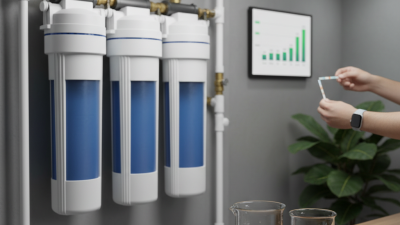
The chart shows typical planning intervals for common well-water treatment components. Actual replacement timing depends on water quality, flow rate, household usage, and manufacturer instructions. Look for applicable NSF/ANSI certifications, such as Standard 42 for aesthetic issues, Standard 53 for specific health-related contaminants, Standard 55 for UV treatment, Standard 58 for reverse osmosis, and Standard 44 for water softeners.