What Is a Water Filter Cartridge and How Does It Work?

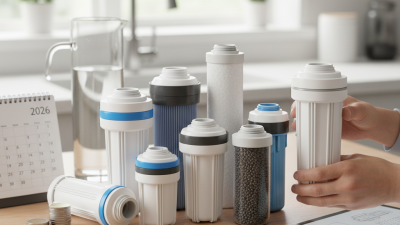
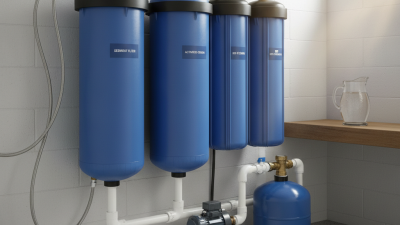
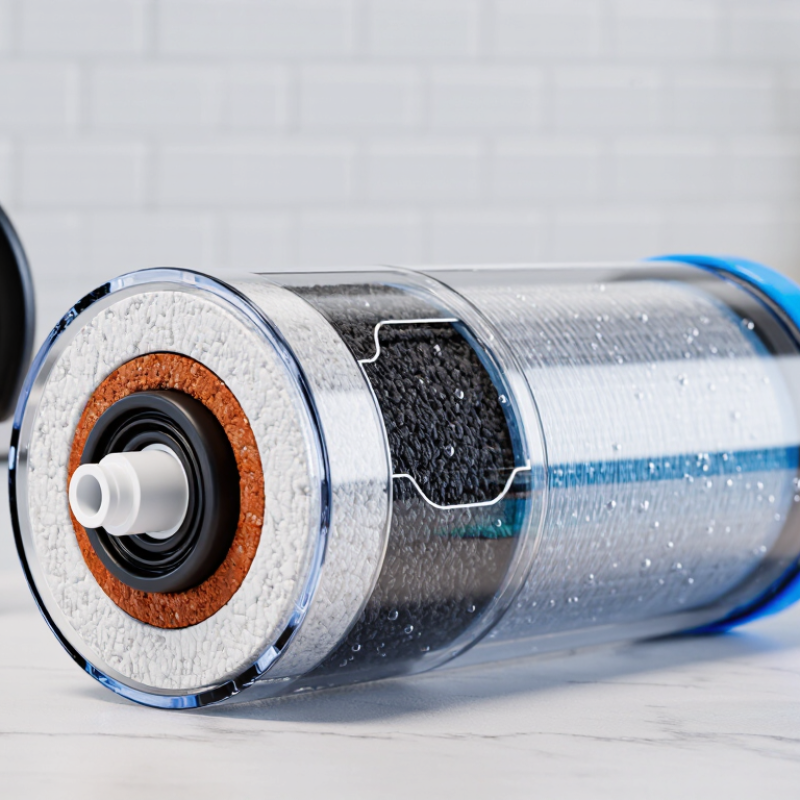
A water filter cartridge is the working heart of many household and commercial filtration systems. It is the replaceable cylinder that water passes through before reaching a glass, kettle, shower, or production line. Inside, different materials target different contaminants. Sediment media trap sand, rust, and visible particles. Activated carbon can reduce chlorine, odors, and certain organic compounds. Membrane cartridges use extremely small pores to separate finer impurities.

Water-treatment author Frank R. Spellman describes filtration as “the process of removing suspended solids from water.” That explanation is simple, but incomplete for modern cartridges. Many models combine physical straining, adsorption, and chemical treatment. Performance depends on pore size, flow rate, water temperature, and contact time. A cartridge may look clean while its carbon surface is already exhausted. That is easy to miss.

Imagine turning on a kitchen tap and hearing a slight hiss as water enters the cartridge. Pressure pushes water through layered media, while unwanted particles remain trapped. Over time, the flow may weaken. Taste may change. These signs deserve attention, but they do not prove every contaminant has been removed. Testing matters.

This guide will explain how a water filter cartridge works, what its internal layers do, and why replacement timing affects safety and performance. It will also compare common cartridge types, certification claims, maintenance needs, and practical selection factors. The imperfect part is unavoidable: no single cartridge solves every water problem. Proper treatment begins with knowing the water source.
What Is a Water Filter Cartridge and How Does It Work?

What a Water Filter Cartridge Is: Media, Housing, and Rated Capacity

What Is a Water Filter Cartridge and How Does It Work?

A water filter cartridge is a replaceable treatment unit, not a complete purification system. It contains media inside a sealed housing. Common media include sediment fiber, activated carbon, ion-exchange resin, and specialty membranes. Each material targets different impurities. Sediment media traps particles like sand and rust. Carbon adsorbs many taste, odor, and organic compounds. The housing directs water through the media and prevents bypass. Small details matter. A damaged seal can defeat expensive media.

Rated capacity describes how much water the cartridge can treat before replacement. It is not the same as flow rate. For example, a cartridge rated for 1,000 gallons may perform differently at high pressure or with heavily contaminated water. The rating also depends on a specific test contaminant. NSF/ANSI 42 addresses aesthetic claims, while NSF/ANSI 53 covers health-related contaminant reduction claims. These standards require defined testing, but they do not mean every cartridge removes every contaminant.

The WHO/UNICEF Joint Monitoring Programme reported that 2.2 billion people lacked safely managed drinking water in 2022. Household filtration can help, yet performance needs verification. The U.S. EPA’s 2024 PFAS regulation set limits of 4.0 nanograms per liter for PFOA and PFOS. A carbon cartridge may reduce some PFAS, but only a tested claim proves suitable performance. In practice, I would check the source water, certification, capacity, and replacement schedule. Many users focus on the gallon number and overlook flow conditions. That is an understandable mistake.

How Micron Ratings Work: Typical 0.5–100 µm Sizes, Flow, and Pressure Loss

A water filter cartridge is a replaceable barrier filled with fibers, pleated media, carbon, or other treatment material. Its micron rating describes the particle size it can capture. Common ratings range from 0.5 to 100 µm. A 100 µm prefilter catches visible sediment, while a 0.5 µm cartridge targets much finer particles. The number needs context, though. “Nominal” ratings indicate approximate removal, while “absolute” ratings claim a tighter capture threshold. The Water Quality Association’s technical guidance warns that these terms are not interchangeable.

Micron size affects flow and pressure loss. Smaller pores usually create greater resistance, especially when sediment loads the surface. The U.S. EPA’s Water Treatability Database shows that filtration performance depends on media type, water quality, loading, and operating conditions—not rating alone. In practical testing, a cartridge may deliver its advertised flow only at a specified pressure and with clean water. A 5 µm cartridge might feel fast on municipal water, then slow noticeably after several weeks. That change is often the warning sign.

NSF/ANSI 42 and 53 certification can verify specific reduction claims, but neither standard gives every cartridge the same flow rate. Check the tested flow, pressure, capacity, and contaminant claim. I have seen installers compare only micron numbers. That is an incomplete decision. A lower rating is not automatically better; excessive pressure loss can reduce usable water and shorten service intervals. Manufacturer data should be read beside independent certification records and actual inlet-water test results.

What Is a Water Filter Cartridge and How Does It Work? — Micron Ratings, Flow, and Pressure Loss

Nominal Micron Rating Typical Particle Size Removed Rating Type Common Filtration Uses Typical Clean-Water Flow
per 10-Inch Cartridge
Typical Initial Pressure Loss Relative Flow Potential Important Considerations
0.5 µm Fine sediment, very small suspended particles, and some larger microorganisms when the cartridge is appropriately validated Usually nominal; absolute ratings require independent validation Fine polishing, prefiltration for sensitive equipment, and reduction of very small suspended solids Approximately 1–3 gal/min
(3.8–11.4 L/min)
Approximately 0.2–0.7 bar
(3–10 psi)
Low Clogs relatively quickly when the source water contains substantial sediment or turbidity.
1 µm Fine sediment, silt, and many suspended particles around 1 µm or larger Nominal or absolute, depending on the test method Fine drinking-water polishing and protection of downstream membranes or appliances Approximately 2–5 gal/min
(7.6–18.9 L/min)
Approximately 0.15–0.5 bar
(2–7 psi)
Low to moderate A smaller micron rating generally provides finer filtration but increases resistance and loading sensitivity.
5 µm Sand, rust flakes, silt, and common visible sediment particles Commonly nominal; absolute versions provide tighter particle retention General sediment filtration and prefiltration before carbon, ultraviolet, or membrane systems Approximately 3–8 gal/min
(11.4–30.3 L/min)
Approximately 0.1–0.4 bar
(1.5–6 psi)
Moderate A widely used balance between sediment reduction, service life, and water flow.
10 µm Coarse silt, sand, rust, and other visible suspended solids Usually nominal Whole-house sediment reduction and protection of pumps, valves, heaters, and finer filters Approximately 4–10 gal/min
(15.1–37.9 L/min)
Approximately 0.05–0.3 bar
(0.7–4.4 psi)
Moderate to high Provides lower resistance than finer cartridges but does not remove very small particles efficiently.
25 µm Coarse sediment, sand grains, rust particles, and larger suspended solids Usually nominal Pre-screening for relatively clean municipal or well water Approximately 5–12 gal/min
(18.9–45.4 L/min)
Approximately 0.03–0.2 bar
(0.4–3 psi)
High Often selected when preserving flow is more important than removing fine sediment.
50 µm Large sand, grit, pipe scale, and coarse suspended debris Nominal Pre-filtration for wells, irrigation systems, tanks, and equipment protection Approximately 6–15 gal/min
(22.7–56.8 L/min)
Approximately 0.02–0.15 bar
(0.3–2.2 psi)
High Suitable for coarse protection; normally followed by a finer filter when improved water clarity is required.
75 µm Coarse grit, large sand particles, pipe debris, and visible particulate matter Nominal Initial screening for relatively turbid water and protection of downstream components Approximately 7–18 gal/min
(26.5–68.1 L/min)
Approximately 0.02–0.12 bar
(0.3–1.7 psi)
Very high Allows strong flow but has limited effectiveness against fine silt and small suspended particles.
100 µm Large sand, grit, scale, insects, and coarse debris Nominal Coarse pre-screening and protection of pumps, valves, and larger filtration stages Approximately 8–20 gal/min
(30.3–75.7 L/min)
Approximately 0.01–0.1 bar
(0.15–1.5 psi)
Very high Best used as a first-stage screen rather than as a final drinking-water polishing filter.
How to interpret the figures: A micron rating describes the approximate size of particles a cartridge is designed to retain. Nominal ratings indicate an approximate reduction level, while absolute ratings are based on a defined test condition and generally provide tighter retention. Flow and pressure-loss values are indicative ranges for clean water and a typical 10-inch cartridge; actual performance varies with cartridge material, surface area, water temperature, viscosity, turbidity, housing size, and the manufacturer’s test method.

How Filtration Happens: Sediment Capture, Adsorption, and Membrane Separation

A water filter cartridge is a replaceable barrier inside a treatment system. Its design determines what the water can lose.

Sediment capture usually happens first. Fibrous layers trap sand, rust, silt, and visible particles as water passes through small pathways. The U.S. Environmental Protection Agency’s Membrane Filtration Guidance Manual describes microfiltration pores commonly ranging from 0.1 to 10 micrometres. Smaller pores provide tighter separation, but they also increase pressure loss.

Sediment is only one problem.

Activated carbon works mainly through adsorption, not simple absorption. Its porous surface holds chlorine, taste compounds, and some organic chemicals. The World Health Organization’s Guidelines for Drinking-water Quality notes that activated carbon performance depends on contact time, carbon quality, and contaminant concentration. A cartridge can look clean yet perform poorly. That detail is easy to miss.

Membrane separation uses a selective film.

Microfiltration can remove larger particles and many microorganisms, while ultrafiltration and reverse osmosis target progressively smaller contaminants. EPA guidance identifies reverse osmosis as capable of reducing dissolved salts and many inorganic substances. However, real performance depends on pressure, temperature, fouling, and cartridge age. In field maintenance, a slow flow often signals blockage, not better filtration. It may also indicate channeling inside damaged media. Testing the treated water remains wiser than trusting appearance alone.

What NSF/ANSI 42, 53, and 58 Verify in Performance Testing

What Is a Water Filter Cartridge and How Does It Work?

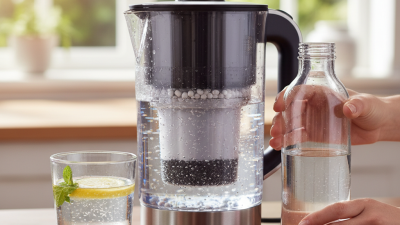
A water filter cartridge contains media that traps, adsorbs, or separates unwanted substances. Activated carbon can reduce chlorine, odors, and some organic chemicals. Sediment media capture visible particles, such as sand or rust. However, a clean-looking cartridge proves very little. Testing matters more than appearance.

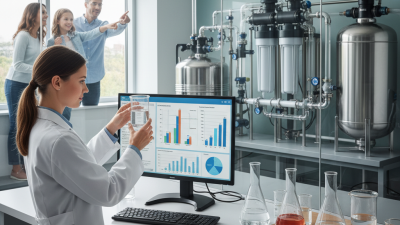
NSF/ANSI 42 verifies claims for aesthetic effects, including taste, odor, chlorine, and particulate reduction. NSF/ANSI 53 addresses health-effect claims, such as lead, cysts, or selected volatile organic compounds. Each claim requires specific challenge-water testing. A cartridge certified for chlorine is not automatically certified for lead. That distinction is often missed. The U.S. Environmental Protection Agency’s 2024 PFAS rule set limits of 4.0 nanograms per liter for PFOA and PFOS. A filter needs a specific, independently verified claim for relevant PFAS reduction.

NSF/ANSI 58 applies to reverse osmosis systems, rather than ordinary drop-in cartridges alone. It evaluates reduction performance, material safety, structural integrity, and recovery-related performance. Reverse osmosis can reduce dissolved solids, but actual results depend on pressure, temperature, membrane age, and maintenance. The World Health Organization and UNICEF reported that 2.2 billion people lacked safely managed drinking water in 2022, showing why transparent performance evidence matters. Certification still has limits. Users should check the exact contaminant, rated capacity, flow rate, and replacement schedule before installation.

What Is a Water Filter Cartridge and How Does It Work?

What NSF/ANSI 42, 53, and 58 Verify in Performance Testing

This chart shows the main testing areas covered by each NSF/ANSI standard. A value of 1 means the testing area is within the standard’s scope; it does not represent a pass rate, removal percentage, or product ranking. NSF/ANSI 42 focuses mainly on aesthetic effects such as taste, odor, chlorine, and particulate reduction. NSF/ANSI 53 covers health-related contaminant reduction claims, while NSF/ANSI 58 applies to reverse osmosis systems and includes system-performance requirements. Certification applies only to the specific claims tested and verified.

When to Replace a Cartridge: Rated Capacity, Pressure Drop, and Hygiene

A water filter cartridge removes unwanted particles, chemicals, or microorganisms as water passes through its media. Inside, layers may trap sediment, absorb compounds, or block very small contaminants. Its rated capacity shows how much water it can treat under specific test conditions. It is usually measured in liters. However, household water rarely matches laboratory water. A cartridge may reach its limit sooner when sediment levels rise. The label cannot see your water.

Pressure drop is a practical warning sign. As trapped particles fill the cartridge, water meets greater resistance. A weaker stream from the faucet may indicate clogging. I once ignored this sign and waited for the scheduled replacement date. The water flow became frustratingly slow. That decision was not ideal. Check flow at the same faucet and pressure regularly. Low building pressure can create similar symptoms, so flow alone is not proof. Replace the cartridge when capacity, noticeable pressure loss, or the stated service period comes first.

Hygiene also matters, even when water still flows normally. A used cartridge stays wet and can collect organic material. Long periods without use may increase this concern. Replace it after the recommended time, especially following extended storage or unusual water discoloration. Wash your hands before handling the cartridge. Clean the housing with safe drinking-water procedures, then flush the replacement thoroughly. Never extend service life only because the water looks clear. Clear water can still carry dissolved contaminants or support hidden microbial growth.