Top 10 Tips for Choosing the Best Water Cleaning System?
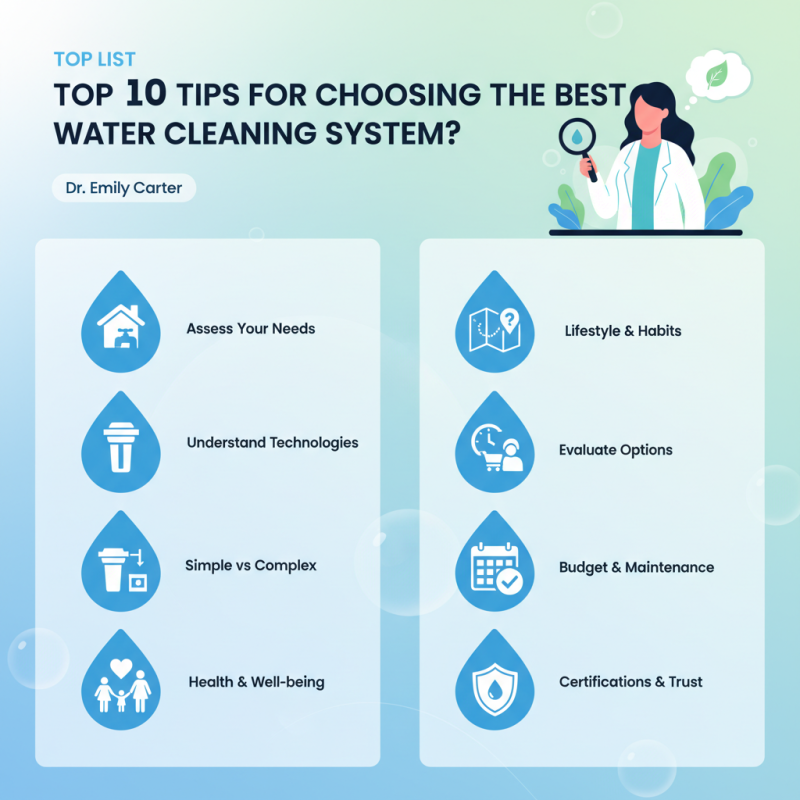
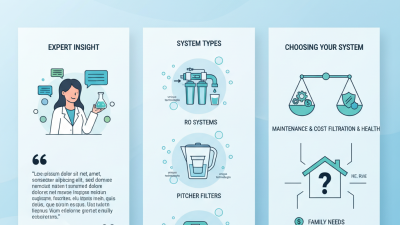
Choosing the right water cleaning system can feel overwhelming. As an expert in the field, Dr. Emily Carter emphasizes, “Clean water is essential for health; selecting the right system matters.” Making informed choices often involves understanding various technologies.
Many types of water cleaning systems exist. Some focus on filtration, while others emphasize purification. It’s crucial to consider your specific needs and the water quality in your area. You might think you need a complex system, but sometimes a simple filter does the job.
Your decision could affect your health and your family’s well-being. Reflection on your lifestyle and water consumption habits is essential. What you choose today impacts your future. Take time to evaluate options thoroughly before making a commitment.
Understanding the Importance of Water Quality for Health and Safety
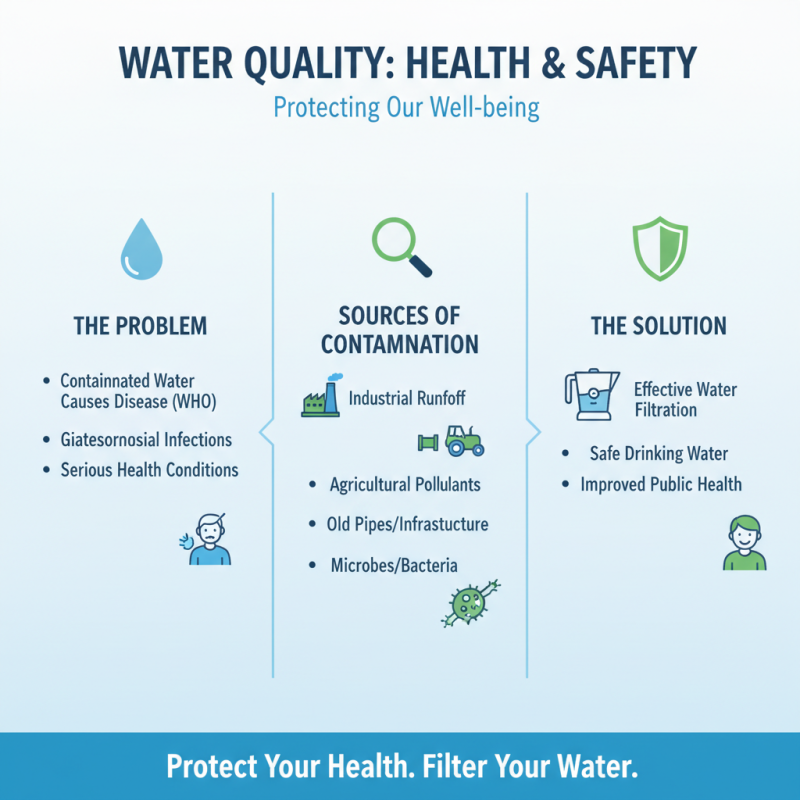
Water quality significantly impacts health and safety. According to the World Health Organization, contaminated water is a major cause of diseases. Poor water quality can lead to gastrointestinal infections and other serious conditions. Understanding the sources of contamination helps emphasize the need for effective water filtration systems.
In 2021, a report indicated that nearly 2 billion people rely on unsafe drinking water. This raises concerns about the toxins and pollutants present in many water supplies. Heavy metals and microbial pathogens are common threats. Ensuring clean water is essential for preventing outbreaks and safeguarding public health.
Choosing the right water cleaning system can address many of these issues. Look for systems that effectively remove contaminants. However, not all systems are equally effective. Some may claim to purify water but fall short in practice. Regular maintenance and testing of these systems are crucial. Ignoring these aspects can lead to trust in a system that ultimately does not deliver clean water.
Types of Water Cleaning Systems: Overview and Key Features
Choosing the right water cleaning system is crucial for ensuring safe drinking water. Various types of systems cater to different needs. Understanding these options is essential.
Reverse osmosis systems are popular for their effectiveness in removing contaminants. They use a semi-permeable membrane to filter water. While they are efficient, they require regular maintenance. Frequent cartridge changes can lead to increased costs.
Ultraviolet (UV) purification systems offer another option. They use light to kill bacteria and viruses. These systems are low-maintenance compared to reverse osmosis. However, they do not remove physical particles. This limitation can impact water quality if not addressed.
Activated carbon filters are also common. They effectively reduce chlorine taste and odors. Yet, they may not eliminate all contaminants. Their lifespan is typically shorter than other systems. Regular monitoring helps ensure effectiveness over time.
Evaluating the Technological Aspects of Water Filtration Systems
When evaluating the technological aspects of water filtration systems, it's crucial to understand the foundational technologies used. Reverse osmosis is popular for removing contaminants. This method pushes water through a semipermeable membrane, filtering out impurities. It’s effective but can waste water. Systems that waste less may be worth considering.
Another technology is activated carbon filtration. This method uses carbon to absorb certain chemicals and improves taste. While it’s reliable for chlorine and volatile organic compounds, it may not eliminate all pathogens. Understanding what each system targets is essential in your decision-making process.
Consider the stage of filtration in each system. Multi-stage systems often provide a thorough level of purification. Yet, they can become complex and require regular maintenance. Evaluating ease of use and maintenance frequency is important. Reflect on your lifestyle and how much effort you're willing to invest in upkeep. These factors will influence the overall reliability of the system you choose.
Top 10 Tips for Choosing the Best Water Cleaning System
| Aspect |
Description |
Importance Level |
| Filtration Technology |
Types such as activated carbon, reverse osmosis, and UV filtration. |
High |
| Flow Rate |
Amount of water filtered per minute; crucial for households with high water demand. |
Medium |
| Filter Longevity |
Duration before the filter needs to be replaced; affects maintenance costs. |
High |
| Contaminant Removal |
Effectiveness in removing specific contaminants such as heavy metals and bacteria. |
Very High |
| Maintenance Requirements |
Frequency of maintenance and ease of replacing filters. |
Medium |
| Size and Installation |
Dimensions and complexity of installation process. |
Low |
| Cost |
Initial purchase price and long-term operating costs. |
High |
| Certification |
Compliance with safety and performance standards. |
High |
| Warranty |
Length and terms of warranty offered by the manufacturer. |
Medium |
| User Reviews |
Feedback from existing users about performance and reliability. |
Medium |
Assessing Cost-Effectiveness and Maintenance Requirements
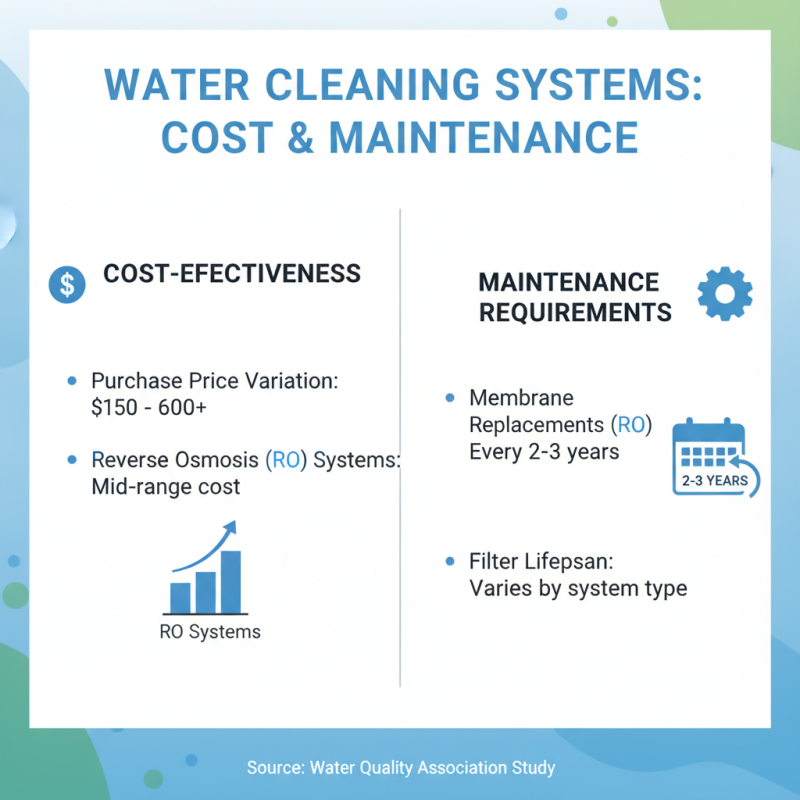
When selecting a water cleaning system, cost-effectiveness and maintenance requirements are crucial factors. A study by the Water Quality Association reveals that systems may vary considerably in both purchase price and longevity. For instance, reverse osmosis systems often cost between $150 to $600, but they can require membrane replacements every two to three years. This factor must be weighed against their efficacy in removing contaminants.
Maintenance is another key aspect. A report from the Environmental Protection Agency emphasizes the importance of regular filter changes and system checks. Neglecting maintenance can lead to decreased efficiency. For example, a neglected system can lose up to 50% of its original filtration capacity. Budgeting for these maintenance costs is essential for true cost-effectiveness.
While initial costs might attract buyers, lifetime expenses can be a hidden burden. Many overlook operational costs, which can create a false sense of savings. Consider a simple approach: calculate total cost over five years. This gives a clearer picture of true affordability, revealing systems that seem cheap at first might not be the best long-term investment. Balancing these factors ensures you choose a reliable system that fits your budget and maintenance capabilities.
Recognizing Certifications and Standards for Water Cleaning Systems
When selecting a water cleaning system, understanding certifications is crucial. Certifications indicate that products meet strict safety and performance standards. Look for seals from reputable organizations. These often ensure the system has undergone rigorous testing. A certified system offers more reliability in treating your water.
Consider the effectiveness of different certifications. Not all certifications are equal; some may cover basic safety while others address comprehensive filtration. Familiarize yourself with these standards to better assess products. This knowledge reduces the risk of falling for misleading claims. Always check for detailed information on the certification criteria each system adheres to.
Reflect on the importance of transparency in labeling. Some systems may boast eco-friendly claims without proper backing. Review available evidence and user reviews. Understanding certifications equips you to make informed choices. In your quest for clean water, staying informed about standards protects not only your health but also the environment.
Top 10 Tips for Choosing the Best Water Cleaning System