10 Essential Tips for Choosing the Best Water Filtration System
Choosing the right water filtration system can be a daunting task. With so many options available, it’s easy to feel overwhelmed. Each system has unique features and functions that cater to different needs. This decision impacts the quality of your drinking water.
Consider how your household uses water daily. Do you need filtered water for cooking, drinking, or both? Knowing your specific needs can simplify your search. Pay attention to local water quality reports. Understanding what contaminants are present helps narrow your choices.
It's crucial to reflect on your budget. High-end systems may have advanced features but may not fit everyone's financial situation. Finding a balance between quality and cost is often challenging. Evaluate warranties and customer feedback, too. These aspects provide insight into a system's reliability and overall performance.
Understanding Water Contamination: Common Pollutants and Their Effects
Water contamination is a serious issue that affects many households. Common pollutants include bacteria, heavy metals, and pesticides. Each of these contaminants has its own harmful effects on health. For instance, heavy metals like lead can cause developmental issues in children. Bacteria can lead to gastrointestinal problems, making it crucial to take action.
Recognizing these threats is the first step towards a safer water supply. It is often unclear how much contamination is present in our drinking water. Many people might not realize the importance of regular water testing. It can reveal unexpected pollutants. This lack of awareness creates a dilemma for families seeking clean water. Understanding these contaminants can make selecting a filtration system feel overwhelming.
Sometimes, the available options may not be fully compatible with all contaminants. This could lead to inadequate filtration and continuous exposure to harmful substances. Families must reflect on their water quality regularly to make informed decisions. Ignoring the specifics may leave them vulnerable to ongoing issues. Ensuring access to clean water is a continuous process that requires attention and effort.
Types of Water Filtration Systems: Comparing Reverse Osmosis and Carbon Filters
When considering water filtration systems, it's important to weigh the differences between reverse osmosis and carbon filters. Reverse osmosis (RO) systems remove up to 99% of contaminants, including dissolved solids and heavy metals. A report by the Water Quality Association indicates that RO systems greatly improve water purity for households. However, they can waste a significant amount of water—up to three gallons for every gallon filtered. This inefficiency may cause concern for eco-conscious users.
Carbon filters, on the other hand, excel at improving taste and odor by removing chlorine and organic compounds. They typically filter water at a lower cost and require less maintenance than RO systems. However, they may not eliminate every contaminant. A study from the Environmental Protection Agency shows that while carbon filters can reduce harmful substances, they do not perform well against heavy metals like lead. This discrepancy might leave some users feeling uncertain about their choice.
Tip: Assess your water quality before choosing a system. Understanding what contaminants are present will guide your decision. If you have high levels of specific toxins, an RO system might be necessary. Keep in mind, though, that no filter is perfect. Always be prepared to test and adapt your water filtration choices as your needs change.
Key Factors to Consider: Water Quality Report and Personal Usage Needs
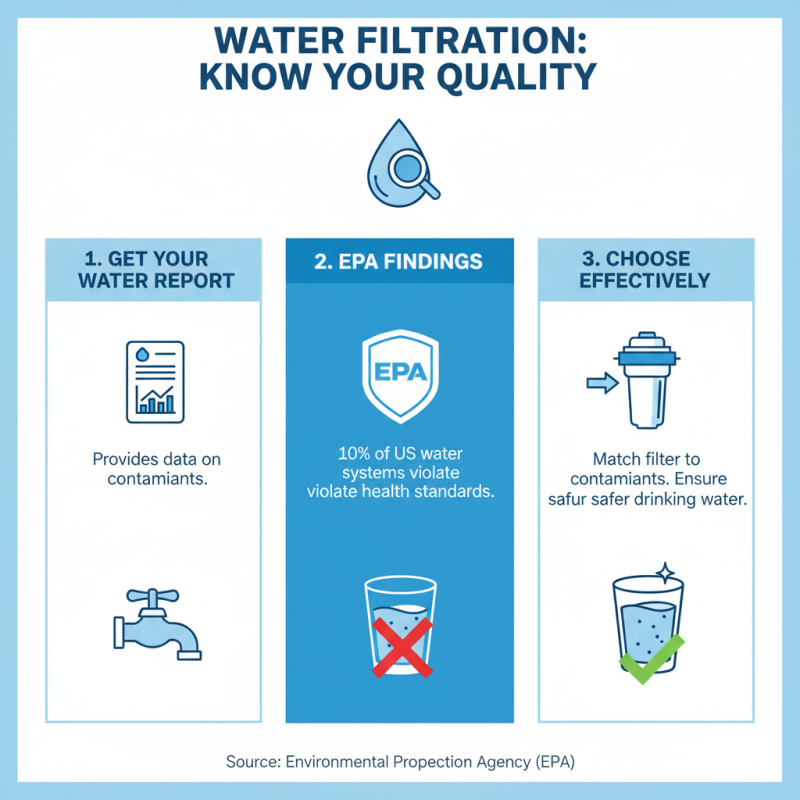
When selecting a water filtration system, recognizing your water quality is crucial. A water quality report provides insights into contaminants in your supply. For example, the Environmental Protection Agency (EPA) states that nearly 10% of U.S. water systems violate federal health standards. Understanding what’s in your water helps you choose effectively.
Personal usage needs also play a vital role in your decision. Are you concerned about taste, odor, or specific contaminants? The CDC indicates that lead and chlorine are common issues in many households. Systems like activated carbon filters can remove these impurities, but they may not handle bacteria well. So, reflect on your lifestyle and usage. Are you using water for cooking? Do you need higher capacity for larger families?
Sometimes, people overlook smaller issues. You might dismiss minor sediment buildup, yet these can impact filtration efficiency. A system that suits your needs today may not work tomorrow. What works well now could feel inadequate with changing water sources or increased family size. Reflecting on these factors can lead to a more informed choice.
Evaluating Filtration Efficiency: Understanding Test Standards and Certifications
When choosing a water filtration system, understanding test standards and certifications is crucial. Not all filtration systems are created equal. Some might claim to remove harmful contaminants but lack solid evidence. Look for certifications from recognized organizations. These can give you peace of mind.
Certifications like NSF or WQA signify that the system has met specific performance standards. However, not all products undergo rigorous testing. Some may rely on misleading marketing claims. Pay attention to the claims made about filtration efficiency. A filter that does not clearly state its removal rates may not be trustworthy.
Reading through test reports can be tedious. The language often seems technical. Yet, taking the time to understand basic terms like "reduction rate" can help. It’s important to ensure that the system will effectively reduce contaminants in your water. Comparing different filtration systems based on their certifications and test results is a necessary part of the decision-making process. Remember, the safety of your drinking water depends on these choices.
Evaluation of Water Filtration Systems: Filtration Efficiency Ratings
Cost vs. Long-term Investment: Analyzing Price, Maintenance, and Longevity
When considering a water filtration system, analyzing cost versus long-term investment is crucial. Consumers often overlook the hidden costs associated with maintenance and filter replacements. According to a study by the Water Quality Association, one-time purchases can be deceptive. While the upfront price of a system might seem reasonable, ongoing expenses can accumulate quickly.
For instance, some filters need replacement every six months, costing around $50 each time. If a system lasts five years, accumulating maintenance could reach $500. Conversely, higher-quality systems may have higher upfront costs. However, they often require less frequent replacements and could last over a decade. An analysis suggests that investing more initially can lead to savings in the long run.
Think about longevity and reliability. Some systems come with warranties or guarantees that indicate their expected lifespan. Filters degradation can impact water quality significantly. Always examine what is included in the purchase. Low-cost systems with poor filtration might save money initially but may lead to additional expenses down the line. Investing in a higher-grade system that meets your needs can be genuinely beneficial for both your budget and health.