
2026 Top Clutch Kit 240mm Types for Global Buyers
Choosing the right clutch kit 240mm in 2026 requires more than checking diameter and price. Global buyers must examine torque capacity, friction material, spline count, release-bearing design, and flywheel compatibility. A 240mm kit may fit one engine perfectly, yet create vibration or premature wear in another application. Small details matter.
Peter Gutzmer, a respected automotive drivetrain specialist, offers a practical reminder: “A clutch is only as reliable as the complete system around it.” This principle guides our review of leading 2026 clutch kit 240mm types, including organic, ceramic, heavy-duty, dual-mass flywheel, and hydraulic-release-bearing configurations. Each type serves a different operating environment. Daily traffic needs smooth engagement. Commercial vehicles need heat resistance. Modified engines demand stronger torque handling.
Fitment remains the difficult part. Catalog descriptions can look clear, but regional vehicle versions often differ in hub design, pressure-plate height, or hydraulic connections. That is where buyers can make expensive assumptions. We compare technical specifications, supplier documentation, warranty terms, and installation feedback from multiple markets. We also consider packaging quality, because a damaged friction plate is not a minor inconvenience.
No single kit wins everywhere. That is the honest answer. The best choice depends on engine output, driving conditions, mechanic capability, and replacement-part availability. This guide helps distributors, workshops, and fleet buyers identify suitable 240mm clutch solutions with greater confidence, while recognizing that real-world performance may still vary.
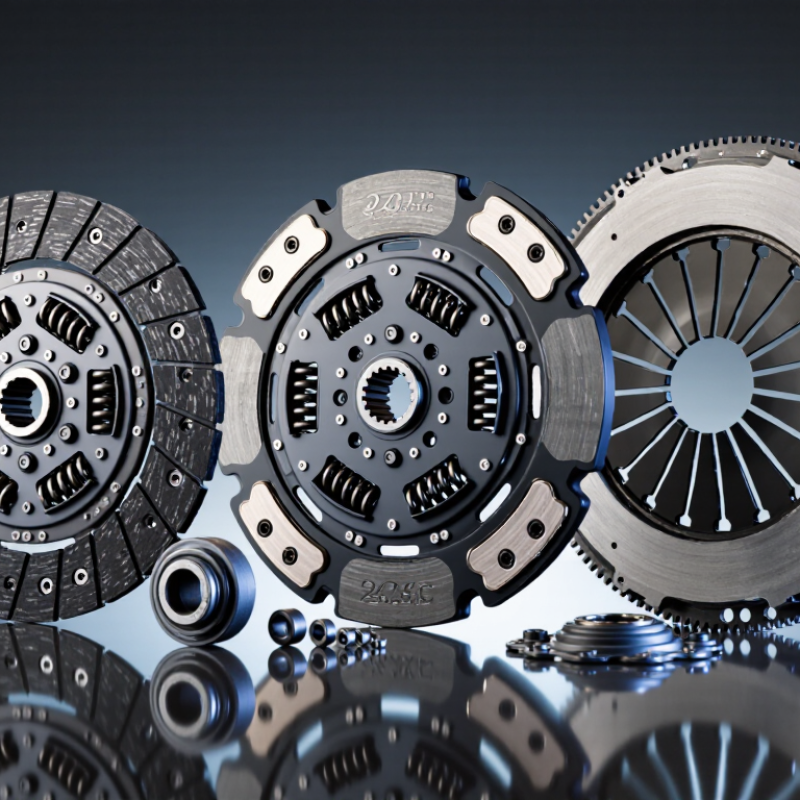
What Is a 240mm Clutch Kit and Why It Matters in 2026
A 240mm clutch kit uses a friction disc measuring approximately 240 millimeters across. The measurement describes the disc diameter, not the complete kit. A typical kit includes a pressure plate, friction disc, release bearing, and alignment components. These parts transfer engine torque to the transmission during gear changes.
In 2026, global buyers are comparing several 240mm clutch kit types. Organic linings usually provide smooth engagement and quieter daily driving. Ceramic or segmented linings can handle higher heat, but engagement may feel sharper.
Dual-mass flywheel systems reduce vibration, while solid flywheel conversions often simplify maintenance. Each design creates a different compromise.
Real workshop inspection matters. I check disc wear, spline fit, flywheel condition, and release travel before recommending replacement. A 240mm kit may fit one vehicle configuration but fail another. Engine torque, transmission input shaft size, driving load, and hydraulic clearance all require confirmation. Small details matter.
Buyers should request verified dimensional drawings, material information, load ratings, and installation instructions. Documentation should also support local vehicle standards and safe workshop procedures. I have seen catalog measurements appear correct, yet the release bearing height was wrong. That mistake can cause incomplete disengagement or rapid wear. Supplier traceability improves reliability, although it cannot replace physical inspection.
Main Types of 240mm Clutch Kits and Their Design Differences
2026 Top Clutch Kit 240mm Types for Global Buyers
A 240mm clutch kit usually refers to the disc’s nominal outside diameter. Its actual fit depends on spline count, hub depth, flywheel design, and release geometry. In workshop inspections, I have found that diameter alone gives an incomplete picture. A kit can measure correctly yet fail because the pressure plate sits at the wrong height.
Organic friction kits use molded friction material with a smooth engagement feel. They suit many passenger vehicles and light commercial applications. Ceramic or segmented friction discs tolerate higher heat and repeated load cycles. Engagement is sharper, though low-speed driving may feel less forgiving. Sintered metal designs provide strong torque capacity, but they can increase noise and wear on the flywheel. That trade-off is often overlooked.
Design differences also appear in the pressure plate. Diaphragm-spring units are compact and common, while stronger spring rates increase clamping force and pedal effort. Some 240mm kits use sprung hubs to absorb drivetrain shock. Rigid hubs transmit more vibration, but they may suit specialized high-load systems. Dual-mass flywheel compatibility must be checked carefully. I once saw a technically sound replacement create judder because the release bearing travel was ignored. This detail is easy to miss. Buyers should compare clamp load, friction material, spline dimensions, bearing type, and operating temperature, not just the 240mm label.
| 240mm Clutch Kit Type | Typical Friction Material | Disc Design | Damper and Hub Configuration | Pressure Plate Design | Engagement Behavior | Heat and Torque Characteristics | Common Application | Main Design Advantage | Main Trade-Off | Comfort Level |
|---|---|---|---|---|---|---|---|---|---|---|
| Organic Full-Face | Woven organic friction lining, commonly reinforced with resin and textile fibers | Full circular friction surface with continuous lining contact | Usually includes a sprung hub and torsion springs for driveline damping | Diaphragm-spring pressure plate with a broad friction ring | Smooth take-up and progressive engagement | Good everyday heat control; torque capacity is generally lower than ceramic or metallic designs of the same diameter | Passenger cars, light commercial vehicles, commuting, and standard replacement use | Best balance of smoothness, noise control, pedal feel, and normal service life | Can suffer faster wear or fade under repeated high-temperature slipping | High |
| Organic Segmented or High-Performance Organic | High-temperature organic compound, sometimes with segmented lining blocks | Segmented or grooved full-face lining to improve heat release and debris evacuation | Typically sprung for road use; hub and spline count remain application-specific | Higher-clamp diaphragm spring than a standard replacement design | Moderately smooth with quicker engagement than a conventional full-face disc | Improved thermal response and moderate torque increase while retaining usable street manners | Modified street vehicles, towing-oriented passenger vehicles, and mixed road use | Combines better heat management with more forgiving engagement than puck-style discs | May require higher pedal effort and can transmit more driveline vibration | Medium-High |
| Ceramic-Paddle | Sintered ceramic friction buttons or ceramic-metallic segments | Commonly 4-, 6-, or 8-paddle segmented disc with reduced lining area | May use a sprung hub for street applications or a rigid hub for competition use | High-clamp diaphragm or strap-drive pressure plate, depending on the kit | Fast, aggressive engagement with less modulation at low speed | High heat tolerance and strong short-duration torque capacity; reduced contact area can increase wear on the mating surfaces | Track-day vehicles, performance builds, rally-style use, and demanding launches | High friction stability at elevated temperatures and quick engagement | More chatter, reduced low-speed smoothness, and greater flywheel or pressure-plate shock | Low-Medium |
| Semi-Metallic | Organic base blended with metallic fibers or particles | Full-face or segmented lining with grooves for cooling and wear control | Usually sprung for road-oriented designs; rigid hubs are also used in competition versions | Medium- to high-clamp diaphragm-spring pressure plate | Quicker and firmer than organic, but generally more controllable than ceramic-paddle | Good compromise between heat resistance and street usability; metallic content can increase abrasion | Performance road vehicles, light towing, and mixed-use applications | Balanced friction performance across a broad temperature range | Can produce more noise and flywheel wear than a fully organic lining | Medium |
| Dual-Friction | Organic lining on one side and ceramic, metallic, or high-performance lining on the other | Different friction materials are used on the flywheel-facing and pressure-plate-facing sides | Normally uses a sprung hub to preserve road manners and reduce torsional vibration | High-clamp diaphragm-spring pressure plate designed to match the mixed-friction disc | Smoother than a fully aggressive disc while providing a stronger bite under load | Useful thermal and torque improvement with a compromise between comfort and performance | Street performance vehicles, occasional towing, and vehicles with upgraded engine output | Offers a practical middle ground between full-face organic comfort and ceramic grip | Friction behavior is less uniform and replacement matching must follow the correct disc orientation | Medium-High |
| Rigid-Hub Racing | Ceramic, metallic, or other high-temperature competition friction segments | Segmented disc with a rigid hub and little or no torsional cushioning | Rigid hub transfers engine torque directly to the transmission input shaft | High-clamp diaphragm-spring or multi-finger competition pressure plate | Very rapid engagement with limited slip control | High resistance to repeated heat cycles and hard launches; increased shock loading reaches the gearbox and driveline | Drag racing, circuit racing, off-road competition, and dedicated competition vehicles | Direct torque transfer and strong resistance to clutch slip | Poor low-speed drivability, more noise, and higher risk of driveline shock or gear damage | Low |
| 240mm Twin-Disc Kit | Organic, ceramic, metallic, or mixed friction materials across two driven discs | Two smaller-thickness friction discs share the torque load within a specialized cover assembly | May use sprung hubs, rigid hubs, or a combination depending on the application | Dedicated twin-disc cover with intermediate floater plate; not interchangeable with a standard single-disc cover | Can be street-friendly or highly aggressive depending on lining, hub, and clamp-force design | Higher torque capacity and greater heat surface area within a similar nominal diameter; setup and service are more complex | High-output engines, motorsport, heavy-duty performance conversions, and limited-space installations | Substantially increases torque capacity without simply using a much larger clutch diameter | Higher cost, more demanding installation, possible rattle, and stricter release-system requirements | Application-Dependent |
How to Match a 240mm Clutch Kit to Vehicle Requirements
Matching a 240mm clutch kit starts with torque, not diameter. Check the vehicle code, engine output, flywheel type, spline count, and release mechanism. A 240mm organic clutch suits many daily vehicles because it offers progressive engagement and manageable pedal effort. A sprung hub also reduces drivetrain shock on uneven roads.
Dual-mass flywheel systems require compatible friction plates and pressure plates. A rigid conversion kit may cost less, but it can increase gearbox noise and vibration. Performance ceramic plates handle heat well, yet they often engage abruptly. That trade-off is easy to underestimate. Always compare the kit’s rated torque with the engine’s peak torque, including tuning or towing loads.
ACEA’s Vehicles on European Roads 2024 reports an average passenger-car age of about 12.5 years. Older vehicles need careful checks for worn flywheel surfaces, hydraulic leakage, and distorted mounting points. EPA’s 2024 Automotive Trends Report also shows that modern vehicles produce substantially more power than earlier generations. This makes thermal capacity increasingly important. ISO 6312 test methods can support friction and endurance comparisons, but catalog figures still need verification. Measure twice. A workshop fit check should confirm disc offset, pilot bearing alignment, and release-bearing travel before ordering.
Global Buyer Checklist for Quality, Standards, and Suppliers
2026 Top Clutch Kit 240mm Types for Global Buyers
Global buyers should define the 240mm clutch type before comparing prices. Common options include organic or ceramic friction facings, solid or sprung hubs, and pull-type or push-type covers. Confirm spline count, hub diameter, release-bearing height, and flywheel compatibility. A clean measurement sheet prevents expensive fitting errors.
Use ISO 9001 certification as a starting point, not proof of product quality. The ISO Survey 2022 recorded 1,265,216 ISO 9001 certificates across 189 countries and economies. Ask suppliers for current certificates, batch records, material declarations, and test results.
Require checks for clamp load, friction stability, burst speed, wear, and release force. Standards matter.
Small details expose weak control. Inspect rivet heads, diaphragm fingers, friction-surface flatness, and bearing noise from sampled kits. Request photographs with lot numbers. Review packaging strength for long ocean shipments.
World Bank’s Logistics Performance Index 2023 assessed 139 economies, showing why delivery visibility and customs readiness deserve attention. A supplier with fast replies may still lack traceability.
I have seen attractive samples fail because the production batch used a different friction compound. Keep an approved sample, define acceptance limits, and audit the first shipment.
This is slower, but safer.
Installation, Maintenance, and Total Lifecycle Cost Considerations
2026 Top Clutch Kit 240mm Types for Global Buyers
A 240 mm clutch kit is not defined by diameter alone. Buyers must verify spline count, flywheel step, release mechanism, and engine torque. Common options include organic, ceramic, and dual-friction discs. Organic discs suit daily traffic and smoother engagement. Ceramic discs tolerate repeated heat, but they may feel harsh during parking. SAE technical literature links clutch durability closely to temperature control, clamp load, and correct alignment.
Installation errors can quietly raise lifecycle cost. The flywheel should be checked for scoring, cracks, and excessive runout. Replace the release bearing when access already requires gearbox removal. Use the specified bolt sequence and torque values. Never center the disc by eye. It wastes time. A short bedding period also helps stabilize friction surfaces. OICA reported 93.5 million vehicles produced globally in 2023, showing why standardized fitment checks matter across diverse markets.
Maintenance should include hydraulic leaks, pedal travel, unusual vibration, and slipping under load. Buyers should calculate purchase price, freight, labor, downtime, and likely replacement intervals. A cheaper kit can cost more when installation fails early. Conversely, an expensive ceramic disc may be unnecessary for urban vehicles. Workshop records often reveal a missed flywheel inspection as the real failure cause. That assumption is convenient, but wrong. Keep service records with mileage, load conditions, and installation measurements. They support warranty discussions and more reliable future sourcing.
